

As “Comprehensive Coverage: General vs Professional Business Insurance” takes center stage, this opening passage beckons readers into a world crafted with good knowledge, ensuring a reading experience that is both absorbing and distinctly original.
In the realm of business insurance, understanding the distinctions between general and professional coverage can be crucial for safeguarding your business interests. Let’s delve into the comprehensive realm of these two insurance types and explore how they can benefit different business scenarios.
General Business Insurance
Insurance is crucial for protecting businesses from financial risks and liabilities. General business insurance, also known as commercial property insurance, provides coverage for common risks that businesses face on a day-to-day basis.
Coverage Provided by General Business Insurance
- Property damage: Covers damage to your business property due to events like fire, theft, or vandalism.
- Liability: Protects your business from lawsuits related to bodily injury or property damage caused by your business operations.
- Business interruption: Provides coverage for lost income and expenses if your business is unable to operate due to a covered loss.
Examples of Situations Where General Business Insurance is Beneficial
- A fire breaks out in your office building, damaging your equipment and furniture.
- A customer slips and falls in your store, resulting in a lawsuit for medical expenses.
- An unexpected disaster forces you to close your business temporarily, leading to a loss of income.
Cost of General Business Insurance vs Professional Business Insurance
General business insurance is typically less expensive than professional business insurance, which offers specialized coverage for specific professions or industries. The cost of general business insurance varies depending on factors such as the size of your business, location, and coverage limits.
Common Exclusions in General Business Insurance Policies
- Natural disasters like earthquakes and floods may not be covered and require separate insurance policies.
- Certain high-risk industries or activities may be excluded from coverage.
- Intentional acts of wrongdoing or illegal activities are typically not covered.
Professional Business Insurance
Professional business insurance provides coverage for businesses and individuals who offer specialized services or advice to clients. This type of insurance is essential for protecting against claims of negligence, errors, or omissions in the services provided.
What Does Professional Business Insurance Cover?
Professional business insurance typically covers legal fees, settlements, and damages resulting from claims of professional negligence, errors, or omissions. It can also include coverage for breach of contract, defamation, and copyright infringement.
Importance of Professional Business Insurance
- Professional business insurance is crucial for businesses in industries such as law, accounting, healthcare, and consulting, where the risk of professional liability claims is high.
- It provides financial protection and peace of mind, ensuring that businesses can continue to operate even in the face of costly legal challenges.
- Having professional business insurance can also help maintain the reputation and credibility of a business in the event of a claim.
Key Differences Between Professional and General Business Insurance
- Professional business insurance specifically covers claims related to professional services, while general business insurance covers more general liability risks.
- General business insurance may not provide adequate coverage for professional liability claims, making professional business insurance necessary for certain industries.
- Professional business insurance is typically more tailored to the specific risks faced by a particular industry or profession.
Customizing Professional Business Insurance
Businesses can customize their professional business insurance policies to meet their specific needs by working with an insurance provider to assess the unique risks faced by their industry or profession. This customization ensures that businesses have the right coverage in place to protect against potential liabilities.
Coverage Comparison
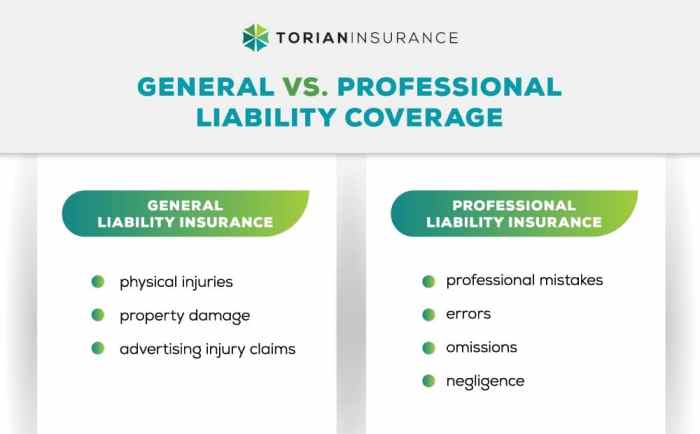
When comparing general business insurance to professional business insurance, it is important to understand the specific risks covered under each type of insurance, as well as their limitations.
Risks Covered
- General Business Insurance:
- Property damage
- Liability claims
- Business interruption
- Employee injuries
- Professional Business Insurance:
- Professional negligence
- Errors and omissions
- Legal defense costs
- Data breaches
Limitations of Coverage
- General Business Insurance:
- May not cover professional errors
- Limited coverage for specialized risks
- Exclusions for intentional acts
- Professional Business Insurance:
- May not cover property damage
- Exclusions for certain types of claims
- Policy limits on coverage amounts
Necessity of Both Insurances
There are scenarios where having both general business insurance and professional business insurance is necessary for comprehensive coverage. For example, a business that operates in a physical location and provides professional services would need both types of insurance to cover property damage and professional liability.
Choosing the Right Insurance
Choosing the right insurance for your small business is crucial to protect your assets and ensure financial stability in case of unexpected events. Here is a step-by-step guide to help you determine whether you need general or professional business insurance.
Evaluate Your Business Insurance Needs
- Assess your risks: Identify potential risks specific to your industry, such as property damage, liability claims, or professional errors.
- Evaluate your assets: Determine the value of your business assets, including equipment, inventory, and intellectual property.
- Consider legal requirements: Research the insurance requirements mandated by your state or industry regulations.
Role of Insurance Agents or Brokers
Insurance agents or brokers play a vital role in helping businesses select the most suitable coverage by:
- Providing expert advice: Agents can offer insights into the types of coverage available and recommend the best options based on your business needs.
- Comparing quotes: Brokers can help you compare quotes from different insurance providers to find the most cost-effective solution.
- Assisting with claims: Agents can guide you through the claims process and ensure you receive fair compensation in case of a covered event.
Real-life Examples
Example 1: A small bakery owner who opted for general business insurance was able to cover the costs of repairing a damaged oven after a fire accident.
Example 2: A freelance graphic designer with professional liability insurance avoided a lawsuit by compensating a client for a design error that led to a delay in a project delivery.
Summary
In conclusion, navigating the realm of business insurance requires a keen understanding of the differences between general and professional coverage. By customizing your insurance needs based on specific industry requirements, you can ensure comprehensive protection for your business. Remember, the right insurance choice can make all the difference in handling unexpected events with confidence.
Q&A
What are the key differences between general and professional business insurance?
General business insurance typically provides broad coverage for common risks, while professional business insurance is more tailored to specific professions and offers coverage for professional liabilities.
When would it be necessary to have both types of insurance for comprehensive coverage?
Having both general and professional business insurance may be necessary for businesses that face a wide range of risks, ensuring they are adequately protected across various scenarios.
How can small business owners determine whether they need general or professional business insurance?
Small business owners can assess their insurance needs based on the nature of their business, the risks they face, and whether they require specialized coverage for professional services.

